INSARAG Organisational Structure
INSARAG Structure
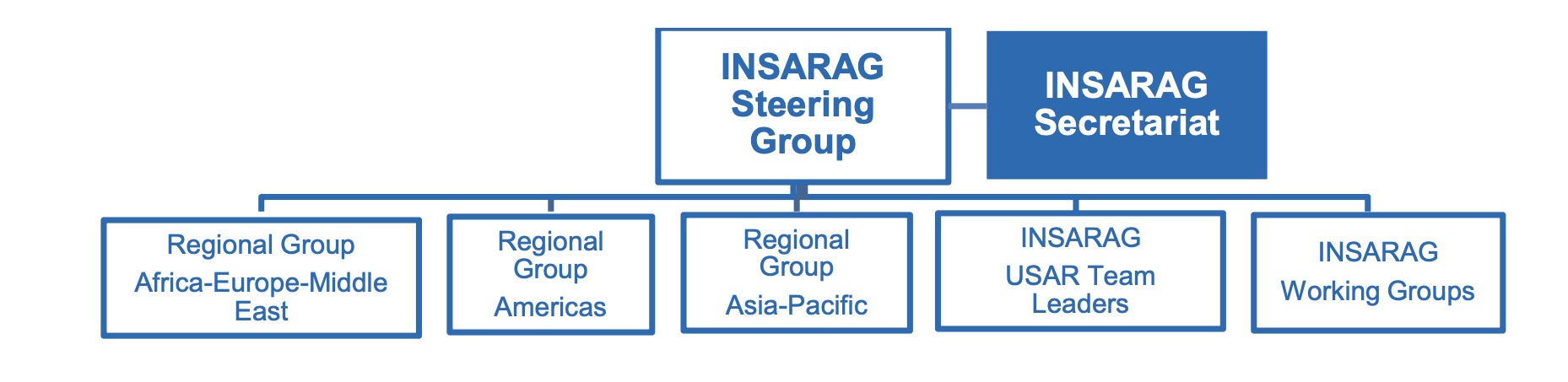
INSARAG is composed of a Steering Group, three Regional Groups, and the Secretariat, as well as the USAR team leaders, and the Working Groups.
The INSARAG organisational structure:
INSARAG Regional Groups
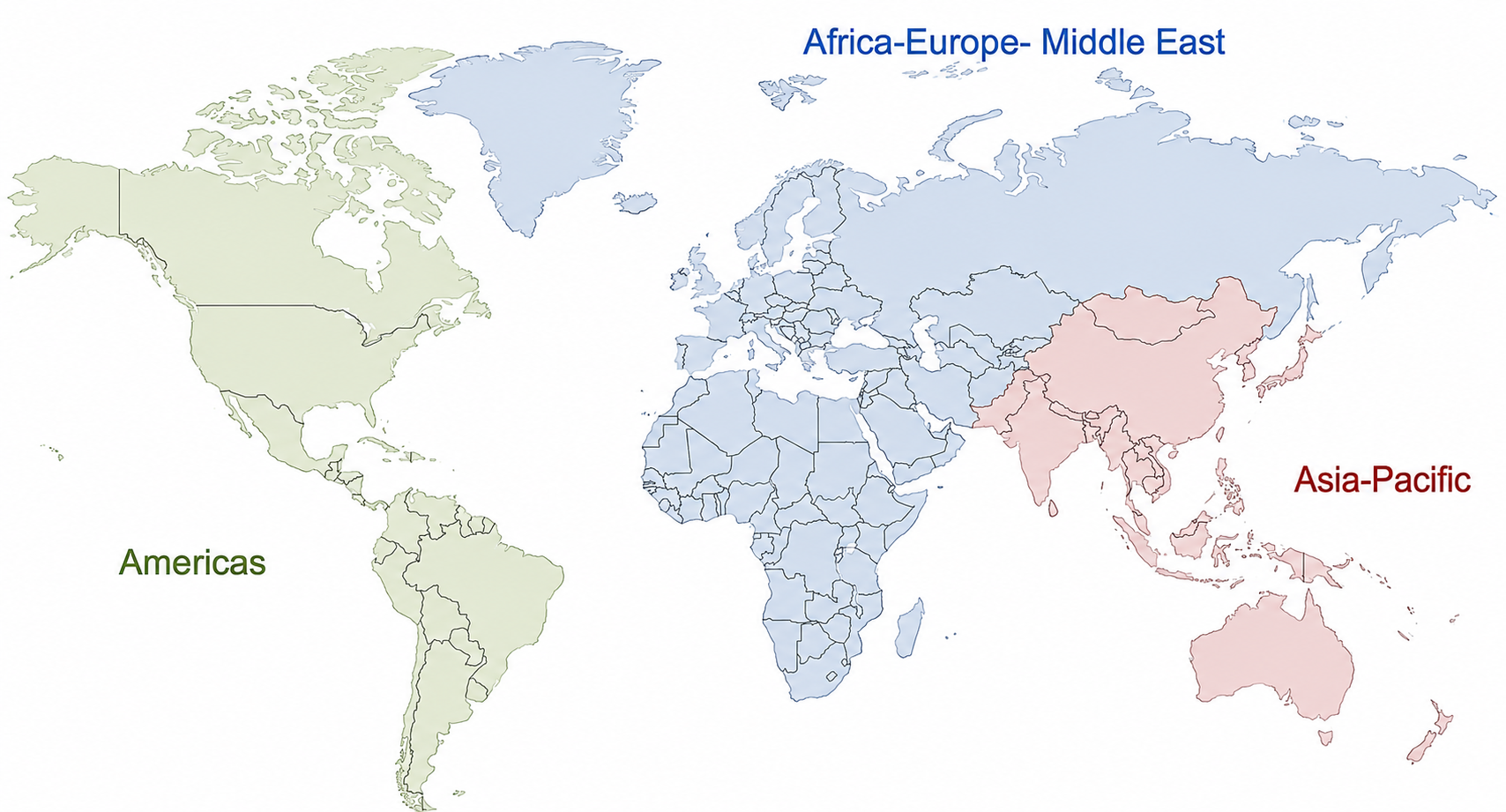
The three INSARAG Regional Groups are:
- The Africa-Europe-Middle East region (AEME)
- The Americas region (Americas)
- The Asia-Pacific region (AP)
The INSARAG Regional Groups:
These Regional Groups meet annually to strengthen national and regional disaster preparedness, and USAR response. The Regional Groups work to ensure that the strategic direction and policies from the Steering Group are implemented, and to assimilate relevant information from participating member states for submission back to the Steering Group.
Each Regional Group is governed by a troika system where there is a chair and two vice-chairs made up of the incoming chair and the outgoing chair. They have a one-year tenure and represent the region at the Steering Group. Member states and member organisations are represented in the Regional Groups through their INSARAG Policy and Operational Focal Points, as well by the INSARAG Team Focal Points.
The Regional Groups are responsible for the implementation of the Steering Group decisions at the regional level, as well as for carrying out the regional annual work programme and activities planned for the region. Together with the Secretariat, they work closely with OCHA Regional and Country Offices to ensure synergies with OCHA's plans and priorities for the region. They also endorse the creation of sub-regional groups of collaborative partners as relevant.
The sub-regional groups of collaborative partners are initiated in regions where their establishment – due to geographical, cultural and language commonalities – ensures effective implementation of the INSARAG mandate.
INSARAG Working Groups
Working groups are established with the endorsement of the INSARAG Steering Group (ISG). The purpose of a Working Group is to develop solutions for specific issues. Each Working Group has terms of reference that reflects the scope and range of deliverables expected to be provided within a specific timeframe. The membership of Working Groups must be decided by the ISG and with support of the respective sponsoring organisations.
Each Working Group has minimum two co-chair, and members nominated from each region to ensure a full, worldwide perspective. A co-chair should preferably be a member of an IEC/R USAR team.
The Working Group may suggest to the Secretariat that a suitable USAR team member, with relevant experience and qualifications to address the issue under discussion, be co-opted to the working group. The Secretariat facilitates the selection of these members in consultation with the Regional and Global Chair, and assists in establishing the terms of reference, provides guidance and establishes timelines for work completion. Membership of a working group needs to be endorsed by the ISG.
The Working Groups are to adopt a co-chair model and provide opportunities for qualified members from other IEC/R teams to participate and engage in the process. The working group ceases when they complete their assigned tasks. The ISG decides extensions of the working group beyond the given mandate.
INSARAG USAR Team Leaders
The USAR team leaders are a group of experienced international USAR practitioners and INSARAG Operational Focal Points from member states.
This group may additionally be called upon for nominations to participate in the Working Groups, engage in other INSARAG activities, including capacity building to contribute to the continued development of INSARAG as a whole.
This expert group meets annually at the INSARAG Team Leaders Meeting to share and discuss best practices, technical ideas and operational issues. The USAR team leaders’ inputs, advice and experience serve to improve the operational capabilities of the INSARAG methodology for both national and international USAR response. Team leaders are encouraged to constantly exchange technical information and best practices bilaterally and sharing through the Technical Reference Library.